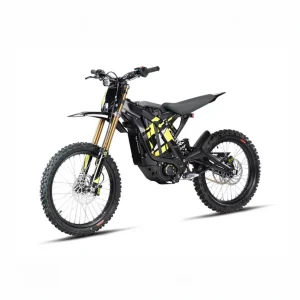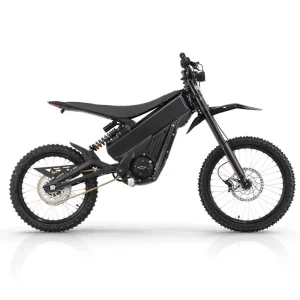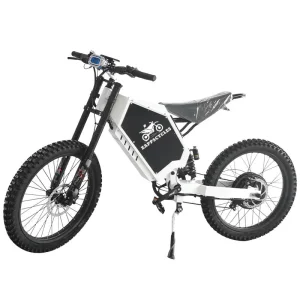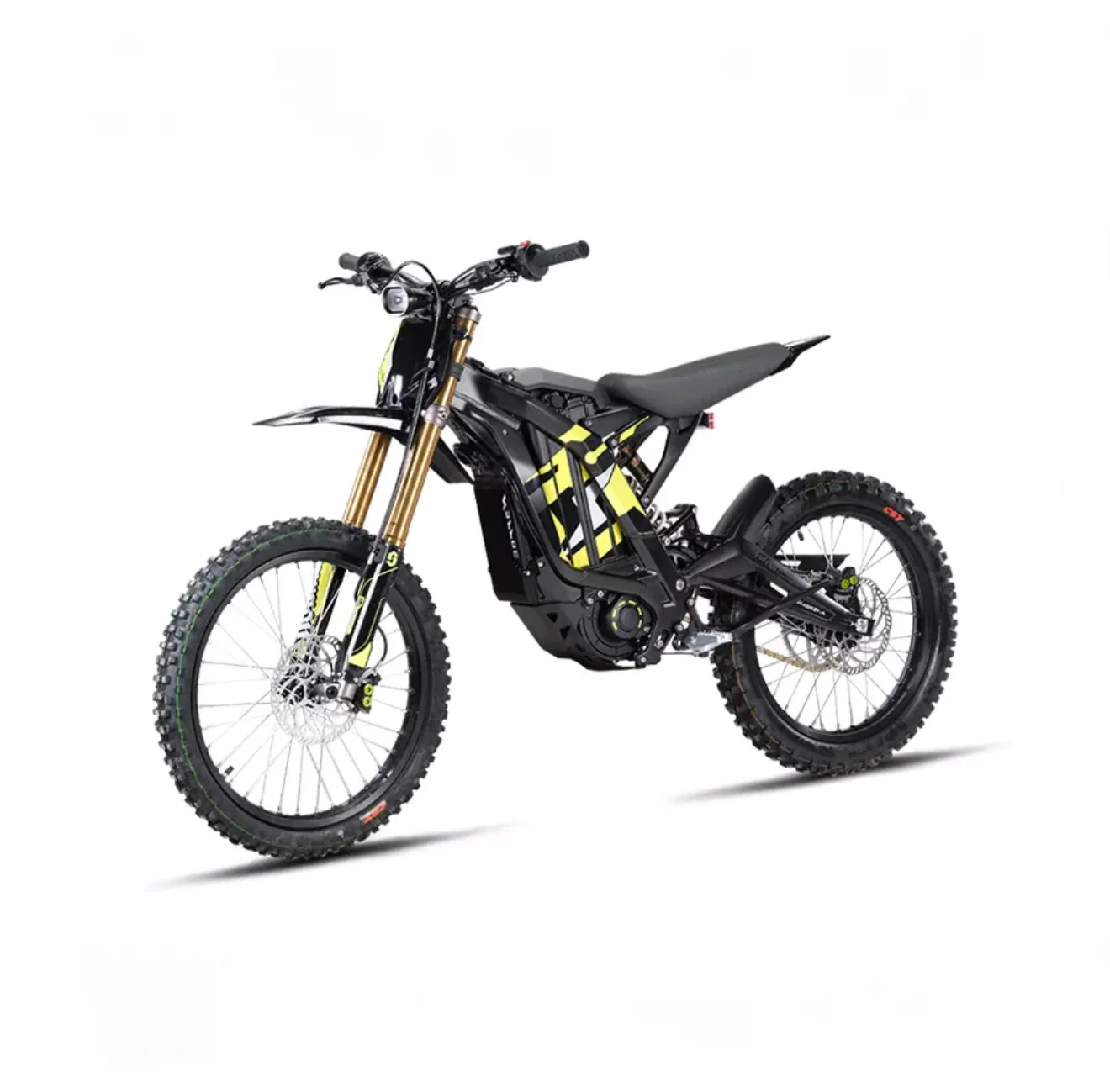
Shopping for an electric bike can get confusing fast. The same words get used for pedal-assist bicycles, gas off-road motorcycles and powerful electric dirt bikes like the Surron Light Bee X. This guide clears it up. We compare e-bikes, gas dirt bikes and electric dirt bikes on speed, power, laws, costs and maintenance, so you can work out which one actually fits the way you want to ride.
We sell electric dirt bikes at our Middletown, NY showroom, and many of our customers start out looking at e-bikes. Here is the honest breakdown we give them.
The quick answer
In short: an electric bike (e-bike) is a bicycle with pedals and a small motor, usually limited to 20 or 28 mph, made for roads and bike paths. A dirt bike is an off-road motorcycle, traditionally gas powered, built for trails and tracks. Electric dirt bikes combine the two ideas: no pedals (in most cases), motorcycle-style power and suspension, and an electric motor instead of a gas engine.
What counts as an electric bike?
In the US, an e-bike is legally a bicycle with a motor. Federal law describes a low-speed electric bicycle as one with fully operable pedals, a motor under 750W, and a top speed under 20 mph on motor power alone. Most states then use a three-class system to decide where e-bikes can ride:
- Class 1: pedal assist only, with the motor stopping at 20 mph.
- Class 2: a throttle is allowed, with motor power limited to 20 mph.
- Class 3: pedal assist only, with the motor helping up to 28 mph.
Because they are treated like bicycles, e-bikes in these classes can usually ride on roads and many bike paths without a license, registration or insurance. Rules vary by state and city, and the PeopleForBikes e-bike law guide is a good place to check the details where you live.
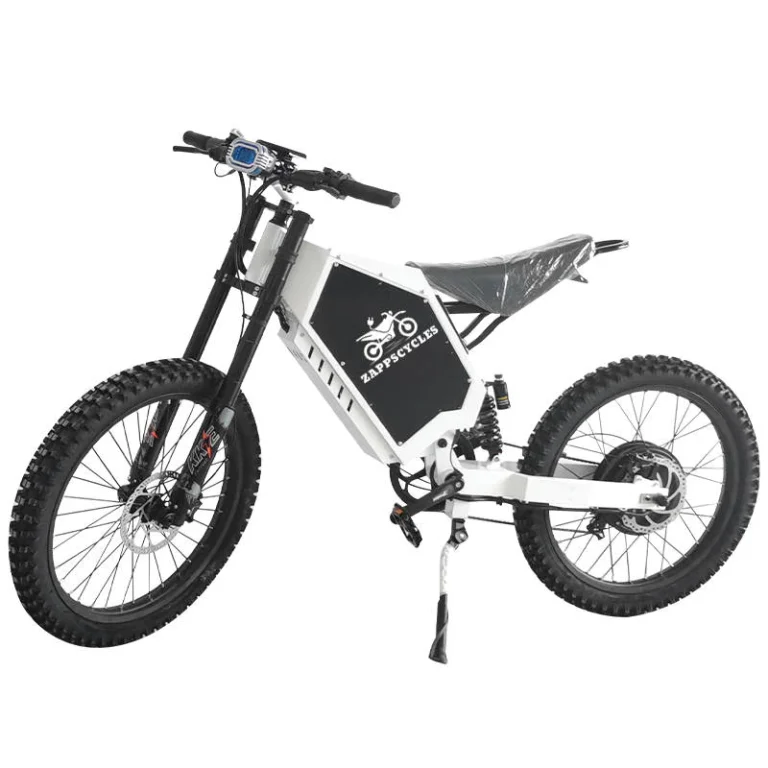
Electric mountain bikes, or eMTBs, are a popular type of e-bike for trails. They have suspension and knobby tires, but they are still bicycles. You pedal them, they weigh around 45 to 60 lb, and their motors are tuned to help you ride, not to replace your legs.
What is a dirt bike?
A dirt bike is a lightweight off-road motorcycle. Traditional models use gas engines from about 50cc for kids up to 450cc for racing. They have long-travel suspension, knobby tires, high ground clearance and a riding position built for standing up on the pegs over rough ground.
Most dirt bikes are sold for off-road use only. They are ridden on motocross tracks, trail systems, private land and off-highway vehicle (OHV) areas. Dual-sport models add lights and equipment for road use, but they need registration, insurance and a motorcycle license.
Where electric dirt bikes fit
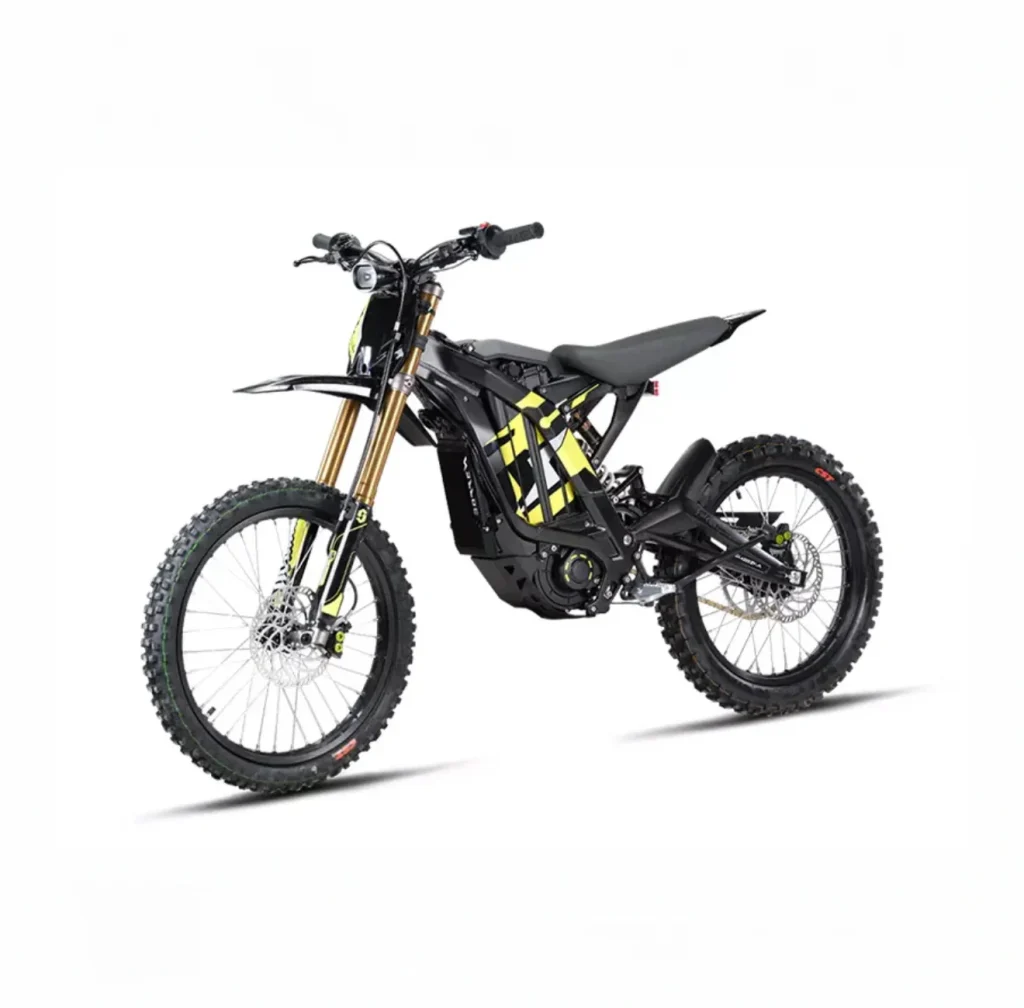
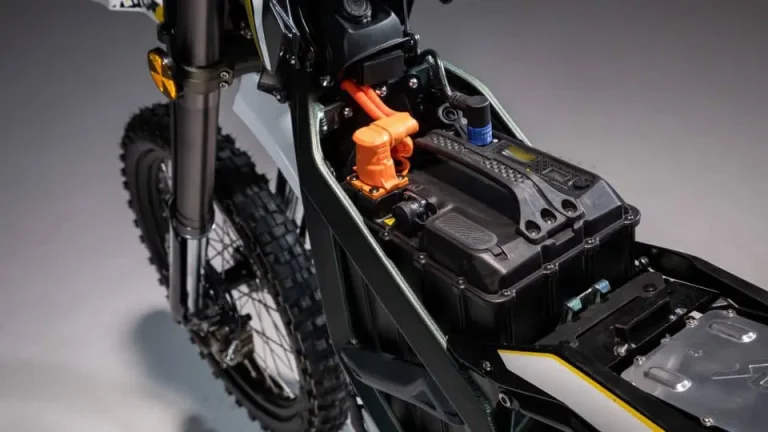
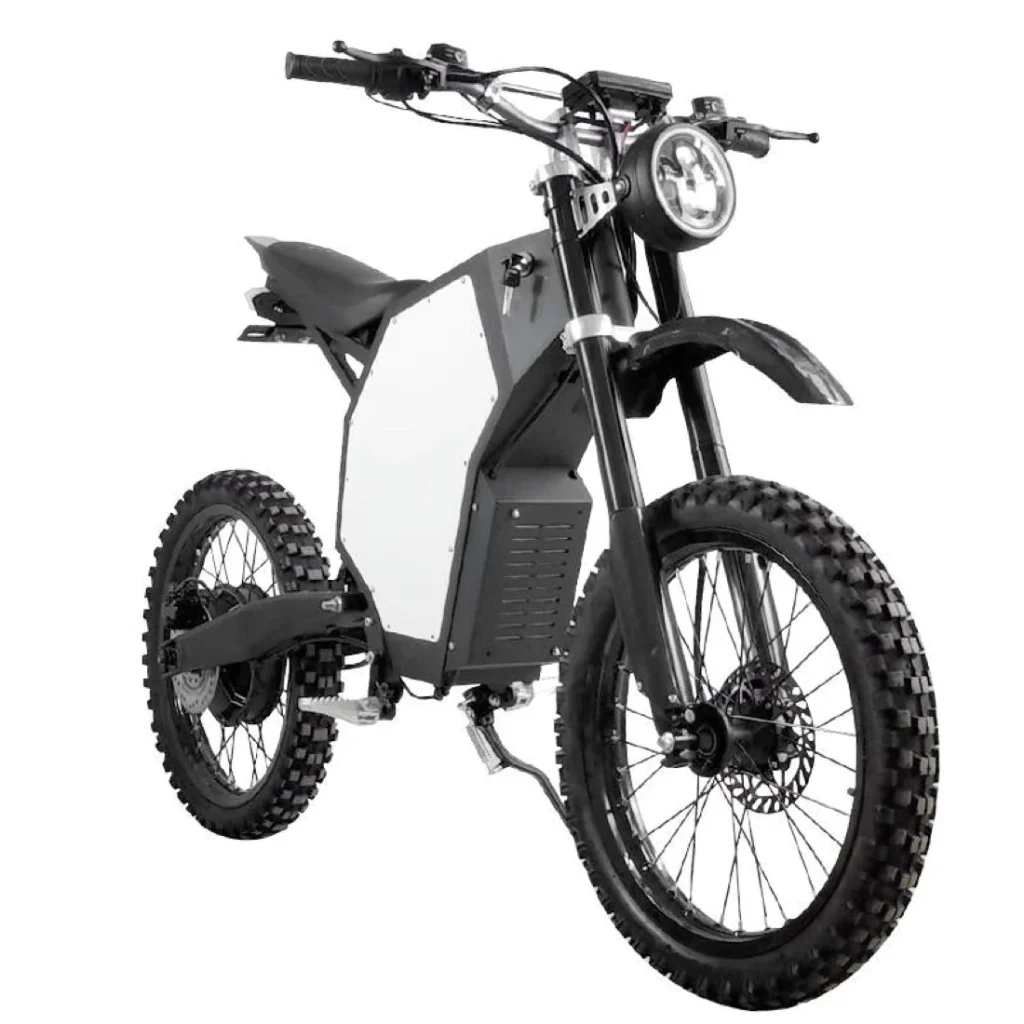
Electric dirt bikes take the dirt bike formula and swap the gas engine for an electric motor and battery. Bikes like the Surron Light Bee X, Talaria X3, Surron Ultra Bee and Stark VARG are built like off-road motorcycles, with real suspension, hydraulic brakes and motors from about 5 kW to over 25 kW. Some, like the Stealth Bomber, even keep working pedals.
Here is the key point: even though people often call them e-bikes, electric dirt bikes are far beyond e-bike limits. A Light Bee X makes around 8,000W at peak and reaches about 47 mph. Legally, that makes it an off-road motorcycle, not an electric bike, so the e-bike rules about bike paths and licensing do not apply.
Side-by-side comparison
| Feature | E-bike | Gas dirt bike | Electric dirt bike |
|---|---|---|---|
| Pedals | Yes | No | Usually no |
| Motor or engine | Under 750W (US classes) | 50cc to 450cc gas engine | About 5 kW to 60 kW electric |
| Typical top speed | 20 or 28 mph assisted | 40 to 80+ mph | 45 to 80 mph |
| Weight | About 45 to 80 lb | About 150 to 250 lb | About 85 to 265 lb |
| Where to ride | Roads, many bike paths and trails | Off-road areas, tracks, private land | Off-road areas, tracks, private land |
| License and registration | Usually none | Off-road use varies; road use needs a license | Off-road use varies; road use needs a license |
| Noise | Near silent | Loud | Quiet |
| Maintenance | Bicycle parts | Oil, filters, plugs, top-end rebuilds | Chain, brakes, tires, suspension |
Speed and power
This is where the three types split apart most. A Class 3 electric bike stops helping at 28 mph, and you still have to pedal. A Class 2 throttle e-bike tops out at 20 mph on motor power alone.
Electric dirt bikes start where e-bikes stop. The Talaria X3 reaches about 46 mph, the Light Bee X about 47 mph and the Surron Ultra Bee about 59 mph. Full-size machines like the AdmitJet Armor and Stark VARG go even faster, with power that matches or beats gas 450cc race bikes. A gas dirt bike covers a similar range, from gentle 110cc trail bikes to 450cc motocross machines.
Power delivery feels different too. Electric motors deliver full torque from a standstill, so electric dirt bikes feel instant and smooth, with no clutch to slip and no engine to stall. Gas bikes build power through the rev range and need gear changes, which many experienced riders still enjoy.
Laws, licensing and where you can ride
An electric bike in Class 1, 2 or 3 can usually ride on public roads and many bike paths, with no license or registration. That makes e-bikes a great choice for commuting, errands and riding from your front door.
Gas and electric dirt bikes are off-road vehicles. In most states you can ride them on private land with permission, at motocross tracks and in designated OHV areas, and some states ask you to register them for off-road use. They are not allowed on bike paths or sidewalks, and riding them on public roads requires a street-legal model, registration, insurance and a motorcycle license.
A few electric dirt bikes, such as the Stark VARG EX and SM, are sold road legal. Most, including the Light Bee X, Talaria X3 and Ultra Bee, are sold for off-road use only. Always check your state’s rules before you ride.
Costs: buying and running
Good e-bikes cost anywhere from about $1,000 for basic commuters to $8,000 or more for top electric mountain bikes. Gas dirt bikes range from a few thousand dollars for small trail bikes to $10,000 or more for new 450cc race bikes.
Electric dirt bikes cover a similar spread. In our store, the youth Surron Hyper Bee is $2,299, the Talaria X3 is $3,199, the Surron Light Bee X is $3,899 and the Surron Ultra Bee is $5,699, with premium machines like the Stark VARG SM at $10,900.
Running costs are where electric wins. Charging an electric dirt bike costs well under a dollar to a couple of dollars per full charge. A gas dirt bike burns fuel every ride and needs oil, filters, spark plugs and periodic engine rebuilds, which can add hundreds or thousands of dollars per season for keen riders.
Maintenance compared
- E-bikes: bicycle-style maintenance: chain, cassette, brake pads, tires and occasional motor or battery checks.
- Gas dirt bikes: oil and filter changes, air filter cleaning, spark plugs, coolant, valve checks and top-end or full engine rebuilds over time.
- Electric dirt bikes: chain and sprockets, brake pads and fluid, tires, suspension servicing and battery care. No oil, fuel or engine rebuilds.
For many riders, the lower maintenance is the biggest reason to go electric. More time riding, less time in the garage.
Noise and riding access
A gas dirt bike is loud, which can upset neighbors and limit where and when you can ride. An electric dirt bike is quiet, with just a light whine from the motor and the sound of the chain and tires. That makes it easier to ride on your own land, near homes and early in the morning, and it helps keep good relationships with landowners. Quiet bikes also let you hear the trail, your tires and other riders much better.
Weight and handling
E-bikes are the lightest, usually 45 to 80 lb, so they are easy to lift onto a car rack. Light electric dirt bikes such as the Light Bee X weigh about 99 lb and the Talaria X3 about 110 lb, which makes them far easier to handle than a typical gas 125cc dirt bike. Mid-size and full-size electric bikes like the Ultra Bee (about 195 lb) and the Stark VARG (around 260 lb) are closer to gas bikes in weight, with power and suspension to match.
Fitness and the riding experience
An electric bike still gives you a workout, because you are pedaling and the motor only helps. That is a big reason people love e-bikes for fitness and commuting.
Riding a dirt bike, gas or electric, is a full-body workout of a different kind. You stand on the pegs, absorb bumps with your legs, steer with your hips and hold on with your core and arms. An hour of trail riding on an electric dirt bike can leave you just as tired as a long bicycle ride, but in a very different way.
Which one should you choose?
Choose an e-bike if:
- You want to commute, run errands or ride on roads and bike paths.
- You want exercise with a boost, and do not need high speed.
- You want to avoid licensing, registration and insurance.
Choose a gas dirt bike if:
- You race in gas classes or ride very remote areas with no way to charge.
- You love the sound and feel of a gas engine and shifting gears.
Choose an electric dirt bike if:
- You want off-road speed, suspension and power with low running costs.
- You ride on private land or near neighbors and want a quiet bike.
- You want a bike that is easy to maintain and ready to ride at any time.
- You are moving up from an e-bike and want much more performance on trails.
Moving up from an e-bike: where to start
If you have been riding an electric mountain bike and want more, a light electric dirt bike is the natural next step. The Surron Light Bee X and the Talaria X3 are light, easy to handle and big upgrades in speed and suspension. Our Talaria X3 price and top speed guide explains that bike in detail.
If you like the idea of keeping pedals, the Stealth Bomber is a 72V hybrid with working pedals and motor options up to 15,000W. Riders who want more power can look at mid-size bikes like the Surron Ultra Bee, covered in our Ultra Bee HP comparison.
Safety gear for each type
On an e-bike, a good bicycle helmet, gloves and bright clothing cover most riding. Faster Class 3 riders often add a more protective helmet.
On any dirt bike, gas or electric, wear a certified full-face motorcycle helmet, goggles, gloves, over-the-ankle boots and body armor. A full set of gear usually costs $400 to $800. Electric dirt bikes are quiet but just as fast as gas bikes, so the same protection applies.
Kids and families: what suits younger riders?
For young children, a small e-bike or a balance-style electric bike for kids is a gentle start. For kids ready for real off-road riding, youth electric dirt bikes are a great alternative to small gas bikes. They are quiet, easy to start and have no hot exhaust or fuel to spill.
The Surron Hyper Bee is a good example. It is built for younger riders, with an adjustable seat height, a parental remote control, an emergency switch and tilt protection. Parents can limit speed while kids learn, then open it up as skills grow.
Whatever you choose, kids need proper gear, close supervision and a safe, open place to practice. Start slow and build confidence before heading onto real trails.
Charging and range in real life
Range varies a lot between types. Most e-bikes manage 20 to 80 miles of pedal assist depending on battery size, terrain and assist level. Electric dirt bikes typically cover 20 to 80 miles depending on the model and how hard you ride, with gentle trail riding giving far more range than racing.
Charging usually takes 2 to 5 hours from a normal household outlet, so most riders charge overnight or between morning and afternoon rides. Many electric dirt bikes have swappable batteries, and a spare pack is the easiest way to double your riding time. Gas bikes refuel in minutes, which still matters for very long rides far from power.
Common myths
- “E-bikes and electric dirt bikes are the same thing.” They are not. One is a bicycle with a small motor; the other is an off-road motorcycle with an electric motor.
- “Electric means slow.” Modern electric dirt bikes can match or beat gas bikes off the line, and premium models rival gas 450s.
- “Batteries die after a year.” Quality lithium batteries last many seasons when charged and stored properly.
- “You can ride anything with a battery on a bike path.” Only e-bikes within the class limits are allowed. Powerful electric off-road bikes are not.
- “Electric bikes are only for beginners.” Professional racers now compete on electric motocross bikes.
Questions to ask before you buy
- Where will you ride most: roads, bike paths, trails, tracks or private land?
- Do you need to ride legally on public roads?
- How fast do you really need to go, and how experienced are you?
- Where will you charge and store it?
- Who will service it, and are spare parts easy to get?
Your answers usually point clearly to one of the three options. If you are still unsure, our team is happy to talk through your riding by email or at the showroom.
The environmental side
Electric models have no tailpipe emissions and no fuel or oil to spill on the trail, which matters in sensitive areas and on your own land. How clean the electricity is depends on your local grid or whether you charge from solar, but even on an average grid, running an electric motor is far more efficient than burning gasoline in a small engine.
Lower noise is an environmental benefit too. Quiet riding disturbs wildlife, livestock and neighbors much less, and it is one reason some landowners and riding areas are more open to electric machines. Look after the battery, recycle old packs through a proper program, and stay on marked trails to protect the places you ride.
FAQ
Is an electric dirt bike an e-bike?
Not legally. An electric dirt bike usually has no pedals and far more power than the 750W, 20 to 28 mph limits for e-bikes, so it is treated as an off-road motorcycle.
Is a Surron an electric bike?
People often call it one, but a Surron Light Bee X or Ultra Bee is an electric dirt bike, not an e-bike. It is built and regulated like an off-road motorcycle.
Do I need a license for an electric dirt bike?
Not for riding on private land or in most off-road areas, though some states require off-road registration. To ride on public roads, you need a street-legal bike, registration, insurance and a motorcycle license.
Can I ride an electric dirt bike on bike paths?
No. Bike paths are for bicycles and e-bikes within the class limits. Electric dirt bikes belong on private land, tracks and legal off-road trails.
Are electric dirt bikes as fast as gas dirt bikes?
Many are. Light models reach about 45 to 50 mph, mid-size bikes around 60 mph, and premium bikes like the Stark VARG match or beat gas 450s in power.
Which is cheaper to own?
An e-bike is the cheapest to buy and run. Between gas and electric dirt bikes, electric is usually much cheaper to run thanks to no fuel, no oil and far less engine maintenance.
Ready for more than an e-bike?
Browse every model in our electric dirt bike shop, order online with secure checkout and shipping across the U.S. and worldwide, or visit our Middletown, NY showroom to see the bikes in person.