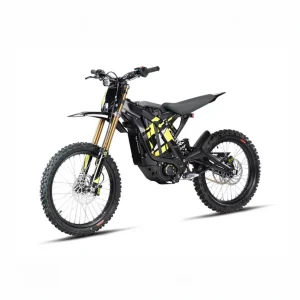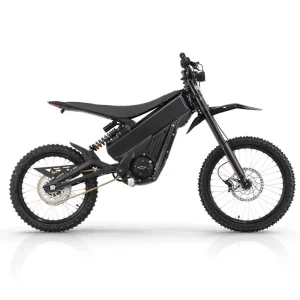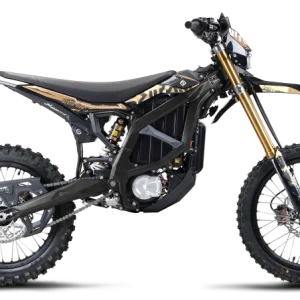
New to electric dirt bikes? You are not alone. Every week we meet riders who have seen a Surron on a trail or a video online and want to know how these bikes actually work, what the numbers mean and what they cost to own. This guide explains it all in plain English, from motors and batteries to sizes, specs and where you can legally ride.
We run a showroom in Middletown, NY, where we sell, set up and service electric dirt bikes from Surron, Talaria, E Ride Pro, Arctic Leopard, Stark and more. The advice below is what we tell first-time buyers before they spend a dollar.
Electric dirt bikes in one minute
Quick answer: electric dirt bikes are off-road motorcycles that use an electric motor and a rechargeable battery instead of a gas engine. They have real suspension, knobby tires and hydraulic brakes, they are quiet, they need very little maintenance, and they deliver full torque the moment you twist the throttle. Most are sold for off-road use only.
What are electric dirt bikes?
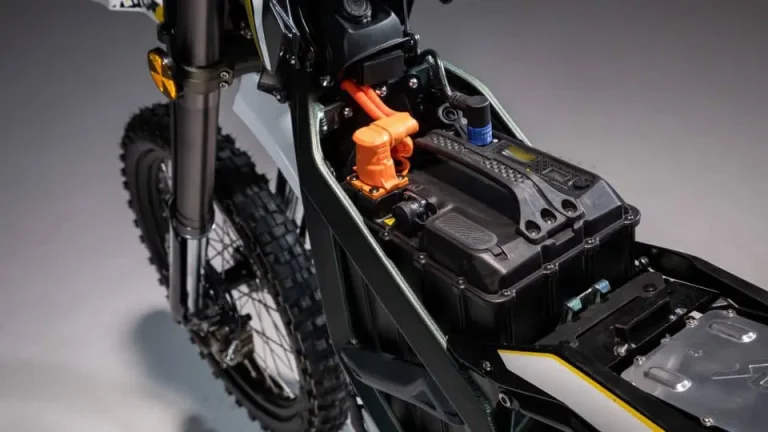
Electric dirt bikes are built for the same places as gas dirt bikes: trails, tracks, fields and private land. The difference is under the seat. Instead of an engine, a fuel tank and an exhaust, they carry a battery pack, a motor controller and an electric motor that drives the rear wheel.
They are not the same as e-bikes. An e-bike is a bicycle with pedals and a small motor, usually limited to 20 or 28 mph. Most electric dirt bikes have no pedals, make several kilowatts of power and reach 45 to 80 mph. If you want the full comparison, read our guide to e-bikes, gas dirt bikes and electric dirt bikes.
How electric dirt bikes work
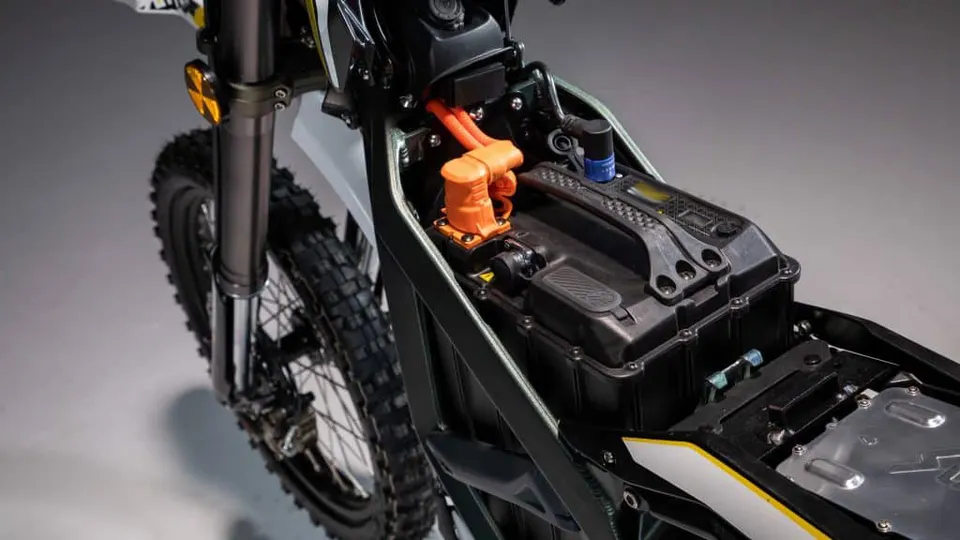
Every electric dirt bike has four main parts working together:
- The battery: a lithium-ion pack that stores energy. Its size is measured in watt-hours (Wh), which is roughly the bike’s fuel tank.
- The controller: the bike’s brain. It takes your throttle input and sends the right amount of power to the motor, and it sets the ride modes.
- The motor: a brushless electric motor, usually mounted in the middle of the frame, that turns electricity into torque.
- The drivetrain: a chain, a belt or a gearbox that carries power from the motor to the rear wheel.
When you twist the throttle, the controller pulls power from the battery and feeds it to the motor. There is no clutch, no gears to shift on most models and no engine to stall. Many electric dirt bikes also use regenerative braking, which slows the bike when you roll off the throttle and puts a little energy back into the battery.
The main types and sizes
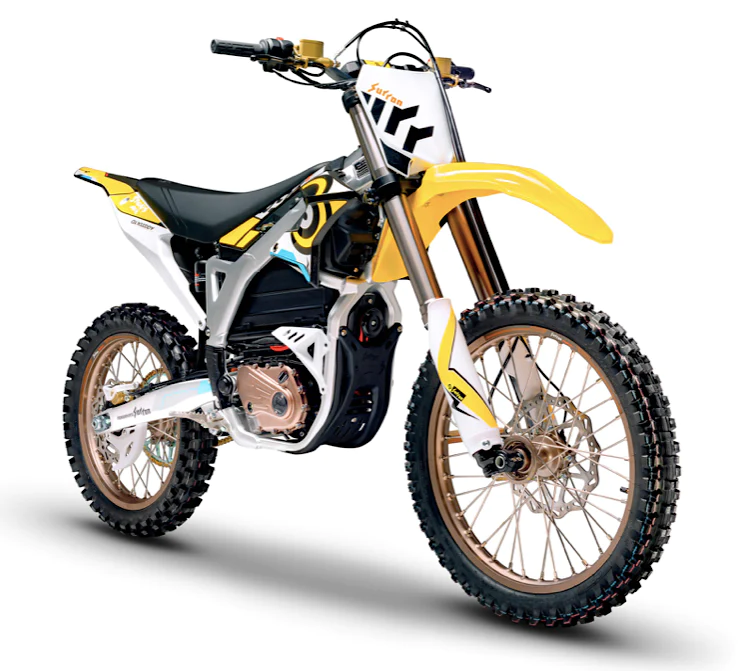
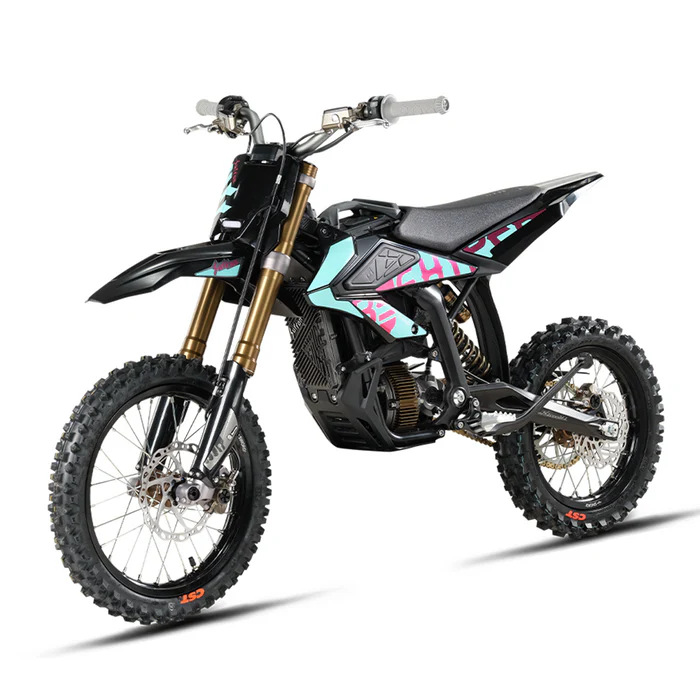
Electric dirt bikes come in clear size classes. Choosing the right class matters more than any single spec. Here are the main groups, with examples and current prices from our store:
| Class | Example | Typical weight | Price (our store) |
|---|---|---|---|
| Youth and pit | Surron Hyper Bee | About 86 lb | $2,299 |
| Lightweight trail | Surron Light Bee X | About 99 lb | $3,899 |
| Lightweight trail | Talaria X3 | About 110 lb | $3,199 |
| Mid-size | Arctic Leopard XE Pro S | About 159 lb | $4,999 |
| Mid-size | Surron Ultra Bee | About 195 lb | $5,699 |
| Full-size | Surron Storm Bee | About 280 lb | $9,399 |
| Hybrid with pedals | Stealth Bomber | Varies by option | From $3,499 |
| Street supermoto | Stark VARG SM | About 274 lb | From $10,900 |
Youth and pit bikes
Small bikes like the Surron Hyper Bee are built for kids and smaller teens, with low seats, gentle power modes and parental controls. Our electric pit bike guide covers this class in detail.
Lightweight trail bikes
This is the most popular class. Bikes like the Light Bee X, Talaria X3 and Talaria Sting weigh around 100 to 130 lb, reach 45 to 53 mph and are easy to lift, load and ride on tight trails. Our electric trail bike guide compares them for trail riding.
Mid-size bikes
Mid-size electric dirt bikes add much more power, bigger batteries and longer suspension. The Ultra Bee, Arctic Leopard XE Pro S and E Ride Pro SR sit here, with 20 to 25 kW of peak power and top speeds around 60 to 70 mph.
Full-size bikes
Full-size bikes like the Surron Storm Bee, Talaria Komodo and Stark VARG match gas 250 to 450cc dirt bikes in size, suspension and performance. They suit experienced riders and racers. Our Surron bikes lineup shows how one brand covers every class, from the Hyper Bee to the Storm Bee.
Hybrids and street models
Hybrids like the Stealth Bomber keep working pedals, and street models like the Stark VARG SM add road equipment. These are niche choices, but they fill gaps the other classes do not.

What the specs mean
Spec sheets for electric dirt bikes can look confusing at first. These are the numbers that matter and what they tell you:
- Peak power (kW): the most power the motor can make for short bursts. 1 kW is about 1.34 hp. A Light Bee X makes about 8 kW, an Ultra Bee HP 24.5 kW.
- Rated power: what the motor can hold continuously without overheating. It is always lower than peak power.
- Voltage (V): higher-voltage systems, like 72V or 74V, generally deliver more power and speed than 60V systems.
- Amp-hours (Ah) and watt-hours (Wh): battery size. Multiply voltage by amp-hours to get watt-hours. More Wh means more range.
- Torque (N·m): pulling power. Wheel torque figures show how hard the bike accelerates and climbs.
- Range: usually measured at a steady, moderate speed. Real trail range is often half the headline number.
- Seat height and weight: just as important as power for comfort and control.
Batteries and charging
Most electric dirt bikes use lithium-ion batteries made from cylindrical cells from brands like Samsung, LG or CATL. Packs range from about 1.3 kWh on youth bikes to over 7 kWh on premium full-size bikes. Many are removable or swappable, so you can charge indoors or carry a spare.
Charging usually takes 2 to 5 hours from a normal household outlet, depending on the battery and charger. To keep a battery healthy, avoid storing it full or empty for long periods, keep it out of extreme heat and cold, and let it cool after hard riding before you charge. A well-treated pack lasts many seasons.
What electric dirt bikes cost
Prices for new electric dirt bikes start around $2,000 for youth models and climb past $10,000 for premium machines. In our store, the Hyper Bee is $2,299, the Talaria X3 is $3,199, the Ultra Bee is $5,699 and the Stark VARG SM starts at $10,900.
Running costs are where electric dirt bikes shine. A full charge typically costs under a dollar to a couple of dollars at US home electricity rates. There is no gas, no oil, no air filter and no engine rebuild. Your main costs are tires, brake pads, chains and the occasional suspension service. If budget is your main concern, our cheap electric dirt bike guide covers the best value options.
Electric dirt bikes vs gas dirt bikes
- Power delivery: electric motors make full torque from zero, so acceleration is instant and smooth.
- Noise: electric dirt bikes are quiet, which helps with neighbors and riding access.
- Maintenance: far less work and cost than a gas engine.
- Range: gas still wins for very long rides far from power, because refueling takes minutes.
- Ease of use: no clutch, no stalling and no warm-up make electric bikes easier to learn.
Where you can ride
Most electric dirt bikes are sold as off-road vehicles. That means private land with permission, motocross tracks and designated off-highway vehicle (OHV) areas. Some states ask you to register off-road bikes, and riding on public roads requires a street-legal model, registration, insurance and a motorcycle license.
The American Motorcyclist Association is a useful resource on riding rights and access. Always check your state’s rules before you ride, and stay on marked trails.
Maintenance basics
- Clean and lube the chain regularly, and check tension.
- Check brake pads and bleed the brakes about once a season.
- Keep tires at the right pressure for your terrain.
- Check bolts, spokes and axle nuts after the first few rides, then monthly.
- Service the suspension when it starts to feel harsh.
- Never pressure-wash the motor, controller, display or battery connectors.
Safety gear you need
Electric dirt bikes are quiet, but they are just as fast as gas bikes. Wear a DOT or ECE certified full-face helmet, goggles, gloves, motocross boots, long pants and a chest protector. Knee and elbow guards are strongly recommended. A good set of gear usually costs $400 to $800.
How to choose your first electric dirt bike
- Start with size. Match the seat height and weight to the rider. Our adult size chart helps here.
- Be honest about skill. A lighter bike with less power is easier to learn on and more fun on tight trails.
- Think about where you ride. Woods and singletrack favor light bikes; open terrain and tracks favor mid-size and full-size bikes.
- Plan your charging and storage. Make sure you have an outlet and a dry place to keep the bike.
- Buy from a real dealer. Parts, warranty help and setup matter long after the sale.
A short history of electric dirt bikes
Electric off-road motorcycles have existed for decades, but early models were heavy, slow and short on range. The big change came with modern lithium-ion cells and compact brushless motors. In 2018, Chinese maker Sur-Ron launched the Light Bee, a light, affordable bike that sat somewhere between a mountain bike and a small motocross bike. It sold in huge numbers and created a whole new category.
Since then, brands like Talaria, E Ride Pro, Arctic Leopard and Stark have pushed electric dirt bikes into every size class, from youth bikes to full-size race machines with up to 80 hp. Battery packs have grown, prices have become more competitive, and features like traction control, wheelie control and app tuning have arrived on mid-priced bikes.
Your first rides: tips that help
- Start in the lowest power mode. Learn how the throttle responds before you unlock full power.
- Practice in an open area. A field or quiet track is the best place to learn braking, turning and throttle control.
- Stand up on rough ground. Standing on the pegs lets your legs absorb bumps and keeps the bike stable.
- Use both brakes. The front brake does most of the stopping, but the rear keeps the bike settled.
- Get used to regen. Many bikes slow down as soon as you roll off the throttle, which feels different from a gas bike.
- Watch the battery gauge. Plan your ride so you finish with charge to spare.
Electric dirt bikes for families
Quiet, clean and easy to start, electric dirt bikes are a great fit for families. Kids can ride youth bikes with parental speed limits, while parents ride a lightweight or mid-size bike alongside them. Because there is no fuel to mix and no engine to warm up, getting everyone out riding takes minutes, and the low noise keeps neighbors happy.
Safety still comes first. Match each rider to the right size bike, use the gentlest modes for beginners, insist on full protective gear and supervise younger riders closely. Many families find that riding together becomes a favorite weekend activity.
Transporting and storing your bike
Lightweight bikes under about 130 lb fit on many hitch-mounted motorcycle carriers and slide easily into a pickup bed with a ramp. Mid-size and full-size bikes need a solid ramp, a trailer or a heavy-duty carrier rated well above the bike’s weight. Always strap the bike down by the frame and handlebars, not the plastic bodywork.
For storage, keep the bike in a dry, cool place. If it will sit for more than a few weeks, charge the battery to around 50% and top it up every month or two. Cover the bike to keep dust off, and check tire pressure and the chain before your next ride.
Riding through the seasons
Lithium batteries deliver less power and range in the cold. Below about 40°F, expect electric dirt bikes to feel a little softer and to lose some range, so store the battery indoors and fit it just before you ride. In summer, avoid leaving the bike in direct sun for long periods and let the battery cool before charging. Light rain is fine, but avoid deep water crossings.
A simple buying checklist
- Is the bike the right size for the rider’s height, weight and experience?
- Is the charger included, and what does a spare battery cost?
- Is shipping to your door included, and is the bike checked before it ships?
- Who handles warranty claims, and are common parts in stock?
- Have you budgeted for safety gear and a few accessories?
Our step-by-step guide on how to buy an electric dirt bike covers each of these in more detail, including what to check when the bike arrives.
Total cost of ownership: a simple example
Imagine a rider who buys a lightweight trail bike and rides twice a week for a year. Electricity for charging might cost $50 to $100 for the whole year. Add a set of tires, brake pads, a new chain and some chain lube, and yearly running costs often stay well under $500. A comparable gas bike would need fuel for every ride, oil changes, air filters and spark plugs, and eventually engine work. For many riders, that difference is the main reason they switch to electric dirt bikes.
Common myths
- “They are slow.” Modern electric dirt bikes accelerate harder than most gas bikes of the same size.
- “The battery dies quickly.” Quality lithium packs last many seasons with good care.
- “They cannot get wet.” Light rain and wet trails are fine; just avoid submerging the motor and battery.
- “They are toys.” Pro racers now compete on electric motocross bikes.
Electric dirt bikes FAQ
How fast do electric dirt bikes go?
Youth bikes reach about 20 to 35 mph, lightweight trail bikes 45 to 53 mph, mid-size bikes around 60 to 70 mph and premium full-size bikes up to about 80 mph. Our fastest electric dirt bikes list ranks them.
How long does the battery last on a ride?
Typically 1 to 3 hours of trail riding, depending on the bike, battery size, terrain and how hard you ride.
Do you need a license?
Not for off-road riding on private land or in most OHV areas, though some states require off-road registration. Road riding needs a street-legal bike and a motorcycle license.
Are electric dirt bikes good for beginners?
Yes. No clutch, no stalling and adjustable power modes make them some of the easiest motorcycles to learn on, as long as you choose the right size and wear proper gear.
How much maintenance do they need?
Much less than gas bikes: mainly chain care, brakes, tires and suspension checks.
Can electric dirt bikes ride in the rain?
Yes, light rain and wet trails are fine for most models. Avoid deep water crossings, never submerge the motor or battery, and do not point a pressure washer at the electrical parts when you clean the bike afterward.
How long do the batteries last before they need replacing?
With sensible charging and storage, a quality lithium pack keeps most of its capacity for several hundred full charge cycles, which is many seasons of normal riding. Heat, deep discharges and long storage on a full or empty battery shorten its life.
Can I ride one to work?
Only if the bike is street legal and registered in your state. Most models are off-road only, so commuting usually calls for a road-legal model such as a supermoto with a road kit, or a regular e-bike.
Find your first electric dirt bike
Compare every model in our electric dirt bike shop, order online with secure checkout and shipping across the U.S. and worldwide, or visit our Middletown, NY showroom to see them in person.