Table of Contents
The Surron Storm Bee and the Ultra Bee are the two biggest bikes in the Surron range, and riders stepping up from a Light Bee X often struggle to choose between them. The Ultra Bee is a compact, do-it-all enduro machine. The Surron Storm Bee is a full-size electric motorcycle. This guide compares them point by point and explains which rider each one suits.
Quick answer: choose the Surron Storm Bee if you are an experienced rider who wants full-size motorcycle stability, power and suspension, and you are comfortable with a bike of about 280 lb. Choose the Ultra Bee if you want a lighter, more agile bike of about 187 to 195 lb with strong power and excellent range, which suits most riders better.
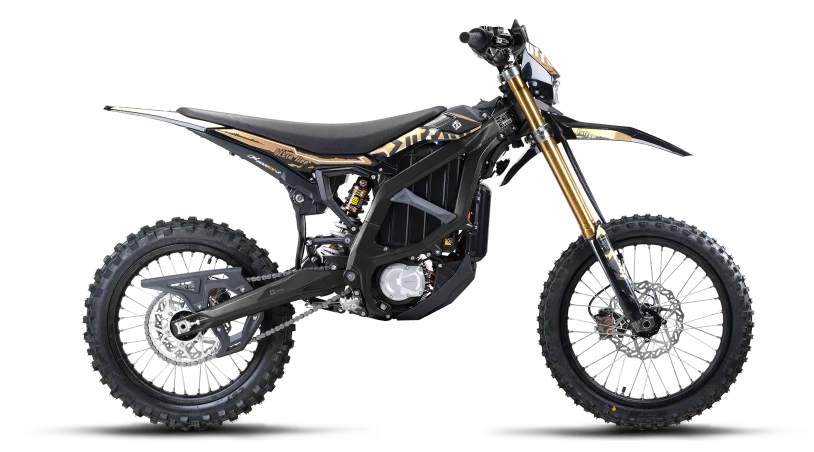
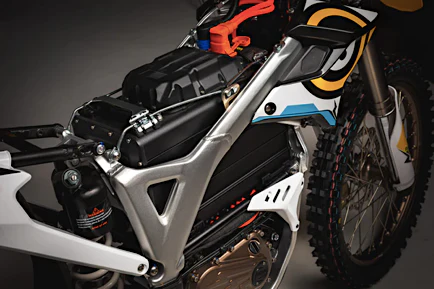
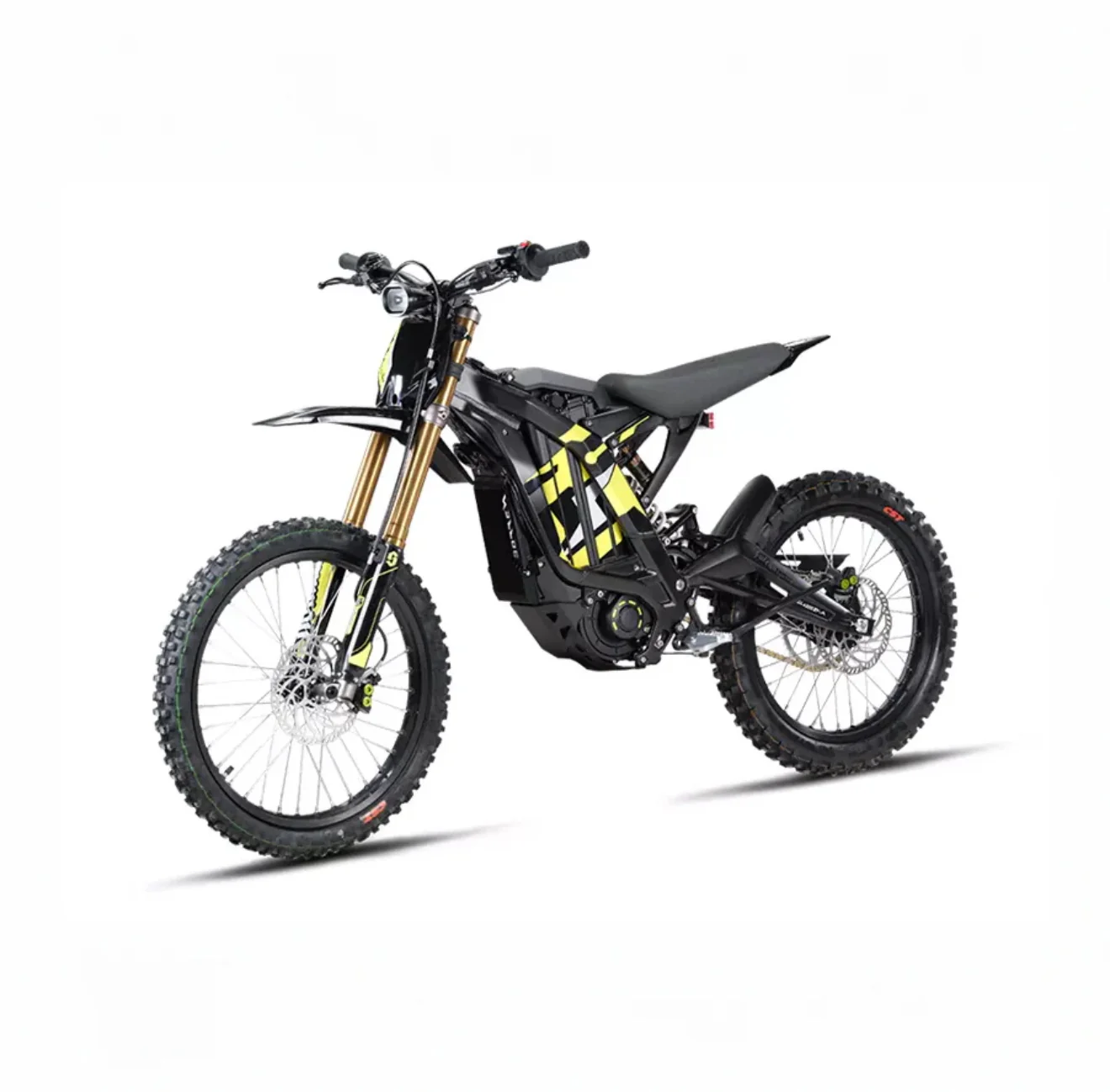
Surron Storm Bee vs Ultra Bee: specs at a glance
| Spec | Surron Storm Bee | Surron Ultra Bee |
|---|---|---|
| Peak power | About 22.5 kW | About 21 kW (Turbo) / 18 kW (Sport) |
| Top speed | Up to about 68 mph | About 59 mph |
| Battery | 104V 55Ah | 74V 60Ah |
| Claimed range | Up to about 75 miles at 31 mph | Up to about 87 miles in gentle riding (claimed) |
| Weight | About 280 lb | About 187 to 195 lb |
| Seat height | About 37 in | About 35.8 in |
| Character | Full-size electric motorcycle | Compact electric enduro |
| Best for | Experienced, larger riders | Most riders stepping up from a Light Bee X |
Figures come from Surron and dealer specifications and can vary by model year and market. The Ultra Bee HP adds more peak power to the Ultra Bee platform.
What is the Surron Storm Bee?
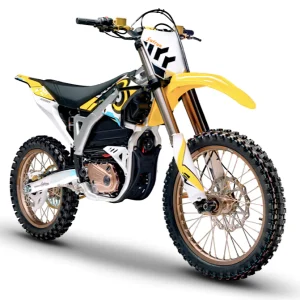
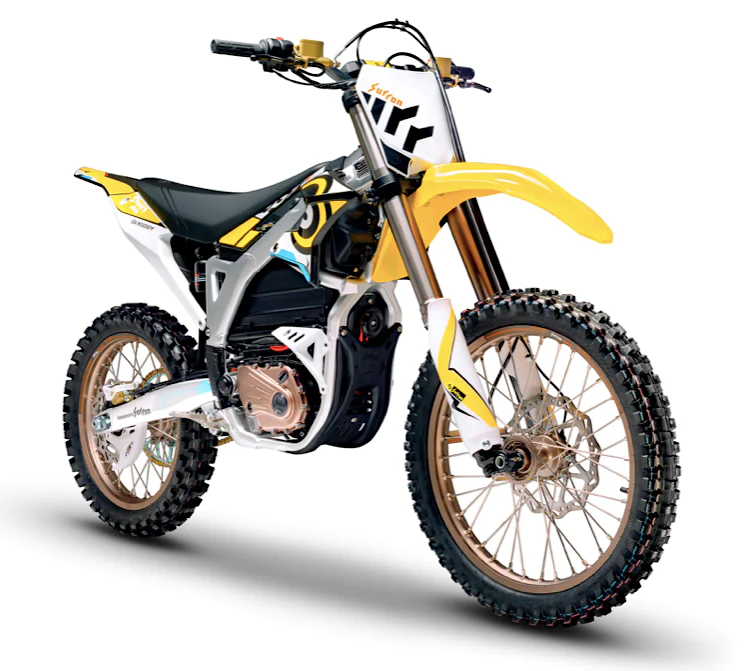
The Surron Storm Bee is Surron’s flagship: a full-size electric off-road motorcycle built to compete with gas trail and enduro bikes. It uses a high-voltage 104V 55Ah battery, a liquid-cooled motor, full-size wheels and long-travel suspension. Multiple ride modes, including Eco, Rain, Sport and Turbo, plus traction control, help riders manage its power. Surron has offered both off-road and road-legal versions of the Surron Storm Bee in some markets.
Reviewers describe the Surron Storm Bee as feeling much more like a traditional motorcycle than the smaller Surrons, with the instant throttle response of an electric motor. Its weight puts it in the same class as many gas trail bikes, so it is aimed at riders with real experience. See current details on our Surron Storm Bee page.
What is the Surron Ultra Bee?
The Ultra Bee sits between the Light Bee X and the Surron Storm Bee. It has a 74V 60Ah battery, about 21 kW of peak power in Turbo mode, 511 Nm of wheel torque and a top speed of about 59 mph. At about 187 to 195 lb, it is far lighter than the Storm Bee. Riders praise its comfortable feel, strong power and excellent range. Many testers found it surprisingly capable even on a motocross track.
Power and speed
The Surron Storm Bee has more peak power and a higher top speed, up to about 68 mph compared with about 59 mph for the Ultra Bee. In practice, both bikes are very fast on trails. The difference shows most on open fire roads, long straights and when carrying a heavier rider. On tight trails, the Ultra Bee’s lighter weight often makes it the quicker bike in real terms. For a full breakdown, see our Surron top speed guide.
Remember that usable speed depends on terrain and skill. On most trails, neither bike will be ridden near its top speed for long, so acceleration, control and comfort matter more day to day.
Weight and handling
Weight is the biggest practical difference. At about 280 lb, the Surron Storm Bee is roughly 85 to 95 lb heavier than the Ultra Bee. That extra mass gives it stability at speed and over big hits, but it takes more effort in slow, technical terrain and is harder to pick up after a fall. The Ultra Bee feels nimble and approachable by comparison. Our Surron weight guide compares every model.
If you often ride alone in remote areas, think carefully about whether you can lift a heavier bike by yourself after a fall on a slope or in mud.
Range and battery
Both bikes have large batteries. The Ultra Bee’s 74V 60Ah pack is known for strong range, and testers have noted that its battery outlasts the Storm Bee’s in similar riding. The Surron Storm Bee’s 104V pack supports its higher performance; ridden hard, it uses energy faster. If long days on the trail are your priority, the Ultra Bee is the safer bet. Read how long a Surron battery lasts for more on range.
Battery capacity also affects resale. Bikes with healthy batteries hold their value far better, so look after the pack whichever model you choose.
Suspension and chassis
The Surron Storm Bee uses full-size, long-travel suspension built for big jumps, whoops and fast, rough ground. It is the better bike for aggressive riding at speed. The Ultra Bee’s suspension is also capable and adjustable, and it handles most trail riding and moderate jumps well, especially for average-weight riders. Heavy riders who push hard will appreciate the Storm Bee’s extra capacity.
Seat height and rider size
The Surron Storm Bee has a seat height of about 37 inches, versus about 35.8 inches on the Ultra Bee. Both are tall bikes. Shorter riders may struggle to touch down on the Storm Bee, especially when stopped on uneven ground. Check our electric dirt bike size chart before choosing.
Suspension sag lowers both bikes a little once you are seated, and lowering links can help shorter riders, though they reduce ground clearance.
Price and value
The Surron Storm Bee costs more than the Ultra Bee. You are paying for a full-size chassis, higher-voltage battery and liquid-cooled motor. The Ultra Bee offers more performance per dollar for most riders. Current prices for both are on our Surron price guide, which updates automatically.
Who should buy the Surron Storm Bee?
- Experienced riders who have outgrown a Light Bee X or Ultra Bee.
- Larger, heavier riders who want full-size stability.
- Riders who ride fast, open terrain and big jumps.
- Riders coming from gas trail or enduro bikes who want a familiar size.
Who should buy the Ultra Bee?
- Riders stepping up from a Light Bee X.
- Riders who want strong power with manageable weight.
- Trail riders who value range and agility.
- Riders who want the best all-round value in the bigger Surrons.
Maintenance and ownership
Both bikes need little maintenance compared with gas bikes: no oil, filters, spark plugs or fuel. Routine checks cover tire pressure, chain, brakes and suspension. The Surron Storm Bee’s liquid-cooled motor means you should also check coolant according to the manual. Store batteries at partial charge indoors over winter. Both bikes have growing aftermarket and parts support; see our Surron upgrades guide.
Keeping a simple log of charges, rides and service tasks makes it easier to spot problems early and supports resale value later.
Our verdict
For most riders, the Ultra Bee is the better buy. It is lighter, easier to ride, goes further on a charge and costs less, while still being very fast. The Surron Storm Bee is the right choice for experienced riders who want full-size motorcycle performance and stability and are comfortable with its weight. If you are unsure, start with the Ultra Bee. For manufacturer details, visit sur-ron.com.
On the trail: how each bike rides
On tight, technical singletrack, the Ultra Bee shines. It turns quickly, lifts over logs easily and is less tiring to muscle around. Riders who come from a Light Bee X feel at home almost immediately, just with more power and more suspension. In slow sections where you need to paddle or balance at walking pace, its lower weight is a real advantage.
On fast, open trails and rough ground, the bigger bike comes into its own. It tracks straight through whoops, soaks up big hits and feels calm at speeds where lighter bikes start to feel busy. Riders with gas motocross or enduro experience often prefer that planted feel. The trade-off appears when the trail tightens up again or when the bike needs to be picked up after a fall.
On the motocross track
Testers have been impressed by how well the Ultra Bee handles a motocross track for a compact e-moto, absorbing longer jumps better than expected. The full-size bike is closer to a traditional MX machine in size and suspension, which suits riders who want to jump bigger features and ride at race-track speeds. Neither is a dedicated race bike, but both can handle track days for riders of the right skill level.
Charging and range planning
Both bikes use large batteries that take longer to charge than the Light Bee X with standard chargers. Plan your rides so you can charge overnight or between sessions. If you ride hard and often, a faster charger is a worthwhile accessory. Store batteries indoors at about half charge during long breaks to protect their lifespan.
Transporting a big Surron
The Ultra Bee can still go on many hitch-mounted motorcycle carriers, provided the carrier and your hitch are rated for its weight. The full-size bike is usually best carried in a pickup bed with a ramp or on a trailer. Use quality soft-loop tie-downs and a wheel chock, and check strap tension after the first few miles of a trip.
How they compare with other brands
In the same performance class, riders also look at the Talaria Komodo, a full-size bike with a 96V battery and a top speed of about 65 mph, and the E Ride Pro SR, a lighter performance bike at about 183 lb with a 72V 50Ah battery and a rated top speed of up to 70 mph. The Arctic Leopard XE Pro S is another strong option at about 159 lb. Each takes a different approach, so compare weight, battery, suspension and dealer support as well as headline speed.
Buying used
When buying either bike used, focus on battery health, crash damage and signs of hard track use. Check suspension seals for leaks, wheel bearings for play, and the chain and sprockets for wear. Ask for proof of purchase and check the frame number. Charge the battery fully and test it on a ride long enough to judge range. A thorough inspection protects you from expensive surprises; our electric dirt bike buying guide has a full checklist.
Upgrades worth considering
- Protection: skid plates and guards protect expensive components.
- Suspension setup: correct sag and spring rates for your weight.
- Tires: matched to your terrain for the biggest gain in grip.
- Brake pads: performance pads for consistent stopping at speed.
- Charging: a faster charger for quicker turnaround.
Real-world scenarios
A 160 lb rider on tight East Coast woods trails
The Ultra Bee is the clear choice. Its lower weight and agility suit rocks, roots and tight turns, and its range covers long loops comfortably.
A 230 lb rider on open Western desert and fire roads
The full-size bike makes a strong case. Its stability at speed, extra suspension capacity and higher top speed suit wide-open terrain and a heavier rider.
A rider moving from a gas 450 trail bike
The bigger bike will feel more familiar in size and suspension. Riders who want something lighter and more playful than their old bike may prefer the Ultra Bee.
A rider upgrading from a Light Bee X
Most will be happiest on the Ultra Bee, which feels like a natural step up in power and comfort without a big jump in weight.
Cost of ownership
Running costs are low for both bikes. Charging a large battery costs a small fraction of a tank of gas, and there are no oil changes, air filters or valve adjustments. The main ongoing costs are tires, brake pads, chains and sprockets, plus suspension servicing for riders who ride hard. Over several years, the battery is the most expensive wear item, so careful charging and storage pay off.
Insurance and registration costs, where they apply, depend on your state and how you use the bike. Riders who convert a bike for road use where permitted should budget for the conversion parts, registration fees and insurance.
Safety and skills
Both bikes are powerful machines that demand respect. Wear a certified full-face helmet, goggles, boots, gloves and body armor every ride. Use the lower power modes while you learn the bike, and practice braking and cornering in a safe area before tackling technical trails. A dirt bike skills course is worth considering for anyone moving up to a bigger, faster bike; the Motorcycle Safety Foundation lists training options.
Questions to ask before deciding
- How much do you weigh with gear, and how tall are you?
- Where do you ride most: tight woods, open trails or tracks?
- How important is range compared with top speed?
- Can you comfortably lift and maneuver a heavier bike?
- What is your total budget, including gear and accessories?
Honest answers to these questions usually point clearly to one bike. If you can, sit on both and try lifting each off its stand before you decide. Our team at the Middletown, NY showroom can help you compare them side by side and talk through the right setup for your weight and riding.
Final word
Both bikes are excellent, but they serve different riders. Pick the one that matches your size, skills and terrain, rather than simply the biggest numbers on the spec sheet, and you will enjoy every ride more.
Surron Storm Bee FAQ
Is the Surron Storm Bee faster than the Ultra Bee?
Yes. The Storm Bee is rated up to about 68 mph versus about 59 mph for the Ultra Bee.
How much does the Surron Storm Bee weigh?
About 280 lb, compared with about 187 to 195 lb for the Ultra Bee.
Is the Surron Storm Bee good for beginners?
No. Its weight and power suit experienced riders. Beginners should start on a Light Bee X.
Which has more range, Storm Bee or Ultra Bee?
In similar riding, the Ultra Bee usually goes further on a charge.
Is the Surron Storm Bee street legal?
Surron has offered road-legal versions in some markets. Off-road versions require conversion and registration where allowed.
What is the seat height of the Surron Storm Bee?
About 37 inches.
Compare the big Surrons
See the Storm Bee, Ultra Bee and Ultra Bee HP with live pricing, order online with secure checkout, or visit our Middletown, NY showroom.